Home › Sitework and Structural Concrete
Superior Concrete Little Rock provides sitework and structural concrete services for commercial and industrial projects across Little Rock, AR. We construct structural concrete footings and walls, retaining walls, piers, pedestals, and heavy duty equipment pads. Our team works from engineered plans to deliver precise structural concrete that supports buildings and machinery safely.
Superior Concrete Little Rock provides professional structural concrete throughout Little Rock, AR, Arkansas and the surrounding area. Our licensed, insured crew delivers safe, clean, on-time work with a free estimate before anything begins. Call (501) 251-1869 or request your free quote.
Sitework and Structural Concrete for Little Rock Projects
When your project needs more than a basic driveway or patio, Superior Concrete Little Rock provides full sitework and structural concrete services tailored to Central Arkansas conditions. This includes everything that happens before and during the concrete pour: clearing and grading the site, building stable subgrades, forming and reinforcing slabs, foundations, piers, and structural walls that actually carry the weight of your building.
Structural concrete is different from decorative flatwork. It is engineered to hold up houses, shops, additions, retaining walls, equipment pads, and multi‑story framing. We coordinate with your architect or engineer, or we can help you connect with one, so the concrete work matches stamped structural plans and local Little Rock codes.
Our team works on residential and light commercial projects across Little Rock, North Little Rock, Bryant, Benton, Jacksonville, and surrounding communities. Whether you are planning a shop building in the county or a renovation in town, we focus on getting the sitework and structural pieces right the first time so everything built on top of it stays level, dry, and safe for the long term.
How We Prepare Your Site Before Any Concrete Is Poured
Good structural concrete starts with good dirt work. In and around Little Rock, we see a mix of expansive clays, rocky ground, and areas with poor drainage, especially near creeks and low spots. Our sitework process is built around solving those local soil issues before concrete ever shows up.
We begin with layout and elevation checks using a laser level, making sure finished floor heights will clear local drainage patterns and meet city or county requirements. Then we handle clearing, stripping topsoil, and hauling away unsuitable material. On many Little Rock lots, we hit clay that holds water. In those cases we often undercut the soft material and bring in compactable base, such as crushed stone or select fill, to create a stable subgrade.
Compaction is critical for structural slabs and footings. We use plate compactors and, on larger jobs, ride‑on rollers, checking density in lifts so the base does not settle later. Where drainage is a concern, like in West Little Rock hillsides or flat backyards in Sherwood, we may install French drains, swales, or under‑slab drainage tile to move water away from your structure.
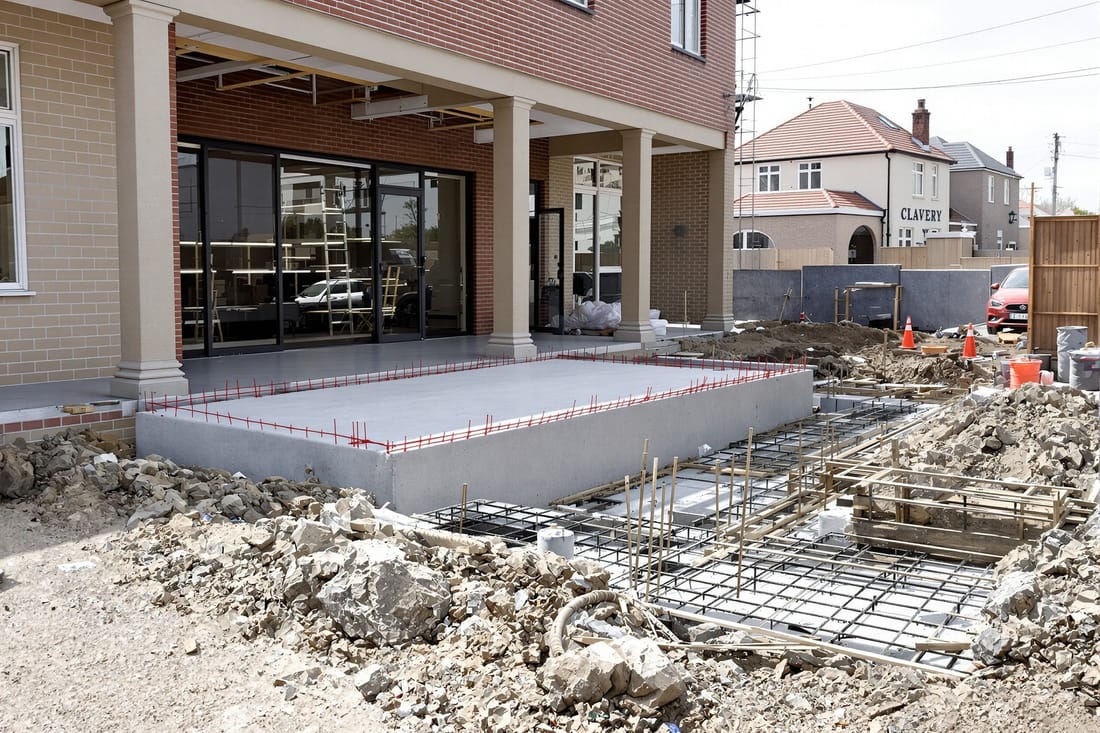
Forming comes next. We build formwork to the exact dimensions and elevations on your plans and allow for thickened edges, grade beams, or step‑downs where the site slopes. Before we call for concrete, we double‑check setbacks, anchor bolt locations, and slab thicknesses so there are no surprises during framing or inspections.
Structural Concrete Options, Reinforcement, and Local Code Requirements
Once the ground is ready, the real structural work begins. Structural concrete in Little Rock usually involves footings, grade beams, piers, crawlspace foundations, and structural slabs on grade. For homes or additions, the engineer may specify continuous footings under all load‑bearing walls with specific widths and depths to handle Arkansas soils. For shops, barndominiums, and small commercial projects, you might see thicker edge beams and interior thickened pads for columns or heavy equipment.
Reinforcement is what lets concrete handle tension and movement. We install rebar cages, mats, and dowels exactly as specified, tying bar with the correct lap splices and clearances from the soil. A typical structural slab might include #4 or #5 rebar on 12 to 18 inch centers, sometimes combined with wire mesh or fiber‑reinforced concrete for crack control. For structural walls or retaining walls, vertical and horizontal rebar patterns are crucial, especially along steep Little Rock lots where there is significant soil pressure.
Local codes in Little Rock and Pulaski County reference the International Residential Code and International Building Code, along with Arkansas amendments. That impacts footing depth (to get below the frost line), minimum slab thickness, vapor barrier requirements, anchor bolt spacing, and reinforcing for wind and seismic forces. Superior Concrete Little Rock coordinates inspections at footing, foundation wall, and pre‑pour slab stages so your project stays on schedule and fully compliant.
There are also mix design decisions that affect performance and cost. For structural elements we usually use higher strength concrete, often 3,500 to 4,000 psi or more, with air entrainment if the slab will see freeze‑thaw or de‑icing salts. In hot Arkansas summers, we pay close attention to temperature, slump, and set time, using retarders or scheduling earlier pours so the concrete does not flash set before it can be properly finished and cured.
What Affects Cost and Timeline for Sitework and Structural Concrete
Two projects that look similar on paper can be very different once we get into the ground. The biggest cost drivers for sitework and structural concrete in the Little Rock area are soil conditions, access, thickness and reinforcement, and project complexity.
Soil and drainage often have the largest impact. If your site has expansive clay, a high water table, or needs significant cut and fill to get to level, we may need more excavation, undercutting, and imported base material. That adds labor, equipment time, and trucking. If your lot is tight or on a steep hill, smaller machinery and additional labor may be required, and concrete trucks may need line pumps, which also changes the budget.
The structural design itself affects materials and labor. Thicker slabs, deeper footings, more rebar, or features like turn‑down slabs, grade beams, and structural piers all require more time to form, tie, and inspect. Special details, such as blockouts for plumbing pits, pits for car lifts, or thick pads for heavy equipment, add complexity but are often necessary to avoid problems later.
Timeline is influenced by both weather and inspections. In Central Arkansas, the best windows for structural concrete work are typically late fall and early spring when temperatures are moderate and rainfall is more predictable. Summer heat is workable but may require earlier start times and careful curing, while prolonged winter cold snaps might delay pours until we can guarantee proper curing temperatures.
Superior Concrete Little Rock provides clear written scopes and line‑item estimates so you know exactly which parts of the sitework and structural concrete are included. When we uncover hidden conditions, such as buried debris or unstable soil, we document them with photos, explain your options, and get your approval before any change in cost, so there are no surprise charges at the end.
Common Problems We Solve and How to Plan Your Project
Many of the structural concrete repairs we see around Little Rock could have been avoided with better sitework and planning. We help you avoid these headaches by addressing them upfront. For example, slab cracking is often tied to poor subgrade prep, lack of joints, or drainage that lets water collect along edges. We design and cut control joints intentionally, slope exterior concrete away from structures, and recommend gutters and downspout extensions where needed.
Foundation settling is another local concern, especially in areas with soft or fill soils. When the soil is questionable, we may suggest deeper footings, wider pads, or drilled piers tied into your structural system. For retaining walls, we always consider drainage behind the wall, using gravel backfill and weep holes or drain pipe so pressure does not build up over time.
Before you hire anyone for sitework and structural concrete in Little Rock, ask how they test and prepare the subgrade, what reinforcement they plan to use, and how they handle curing and weather. Also confirm that they are comfortable working from engineered plans and scheduling city or county inspections. A low bid that skips compaction or uses minimal rebar often leads to costly repairs later.
When you contact Superior Concrete Little Rock, we start with a walkthrough of your site and plans, talk through access and staging, and outline a realistic schedule based on the season. We explain which parts of the project need to be completed before framing, plumbing rough‑ins, and utilities, so everyone involved stays coordinated. Our goal is simple: deliver structural concrete work that supports your building for decades, not just long enough to get through the inspection.