Home › Commercial Concrete Foundations and Footings
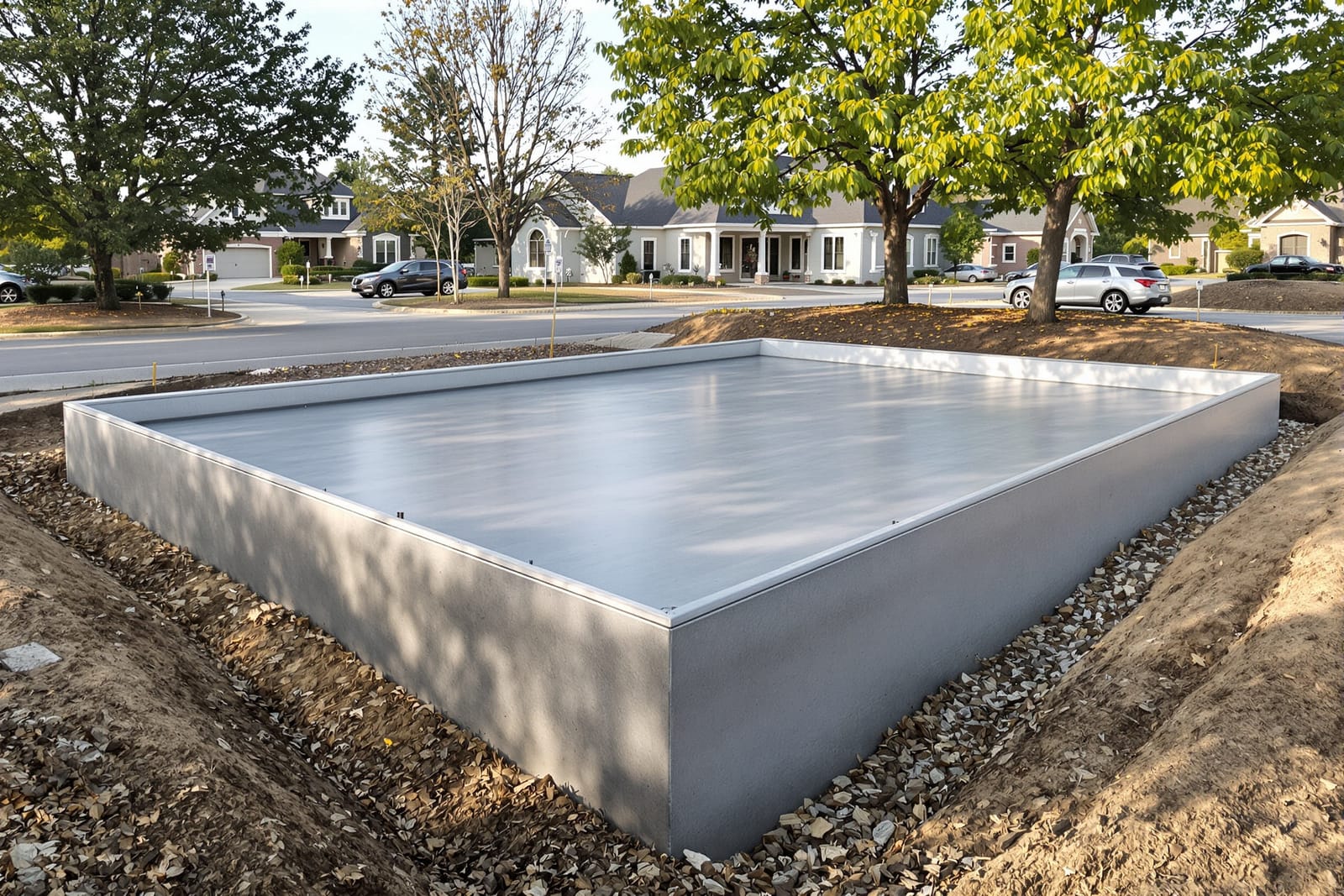
Superior Concrete Little Rock constructs commercial concrete foundations and footings for offices, retail centers, warehouses, and industrial facilities in Little Rock, AR. We install structural concrete footings, grade beams, and foundation walls that meet engineering specifications. Our team focuses on layout accuracy, reinforcement, and proper placement so your building has a solid foundation.
Superior Concrete Little Rock provides professional commercial concrete foundations throughout Little Rock, AR, Arkansas and the surrounding area. Our licensed, insured crew delivers safe, clean, on-time work with a free estimate before anything begins. Call (501) 251-1869 or request your free quote.
Commercial Concrete Foundations Built for Little Rock Conditions
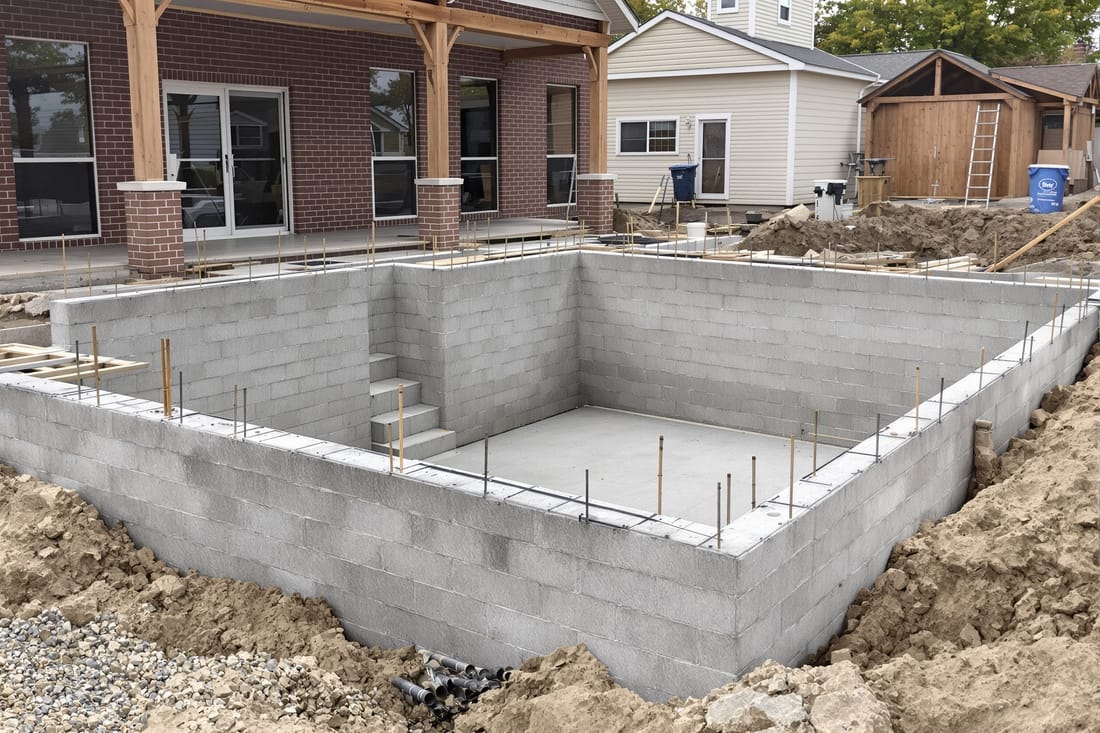
Commercial concrete foundations in Little Rock have to do more than just hold up a building. They have to deal with clay-heavy soils, Arkansas humidity, occasional flooding, and big temperature swings. At Superior Concrete Little Rock, we design and build foundations and footings that match real site conditions, not a one-size-fits-all template.
When you call us about a commercial project, we start with the building use and load requirements. A small retail shell, a medical office, and a warehouse with high rack storage all need different foundation designs. We review your structural drawings, ask how you expect to use the space, and coordinate with your engineer or help you connect with one if you do not have one on board yet.
Local soil behavior is a major factor in design. Much of the Little Rock area sits on expansive clays that shrink and swell as moisture changes. If the footings are not sized and placed correctly, that movement can crack slabs, shift columns, or cause doors to bind. We rely on geotechnical reports where available or help you arrange soil testing. That information guides footing depth, width, and whether we recommend options like piers or grade beams.
Every commercial concrete foundation we install is built with long term performance in mind. That means correct reinforcement sizing and spacing, proper concrete strength for the loads and exposure, and paying attention to drainage and waterproofing at the design stage, not as an afterthought.
Our Process for Commercial Foundations and Footings
A sound commercial concrete foundation starts long before a truck backs up with ready mix. Superior Concrete Little Rock follows a clear step-by-step process so owners, GCs, and design teams know what is happening and when.
1. Site review and layout: We walk the site with your plans in hand, confirm property lines and control points, and identify access issues for equipment and concrete trucks. On tight infill sites in Little Rock, we often plan special pumping setups or staged pours to avoid blocking streets or neighboring drives.
2. Excavation and subgrade prep: Footing trenches and grade beam lines are excavated to the specified depth, usually below the frost line and into stable soil. We remove soft spots and backfill with compacted base material where needed. On clay sites in low spots, we may recommend over-excavation and engineered fill to reduce future settlement.
3. Formwork: We set forms for footings, grade beams, and foundation walls to exact dimensions and elevations. For commercial work, this accuracy matters because steel columns, anchor bolts, and masonry all tie back to these elevations. We use sturdy form systems that can handle higher concrete pressures common on deeper foundations.
4. Reinforcing steel: Our crew places rebar cages, mats, and dowels according to the engineered drawings. We pay attention to bar lap lengths, concrete cover, and correct positioning, because improper reinforcement is one of the main reasons foundations crack prematurely. All rebar is inspected before any pour.
5. Concrete placement and finishing: We coordinate mix designs with local batch plants, including slump, strength, air content, and additives that fit weather and schedule. For large projects, we may schedule multiple trucks and use pumps so the concrete is placed quickly and consolidated properly. Vibrators are used to remove air pockets around rebar and in heavily reinforced areas.
6. Curing and protection: After the pour, we keep the concrete at the right moisture and temperature range to reach design strength. That can mean curing compounds, wet coverings, or insulated blankets in colder weather. We also protect fresh concrete from traffic and vibration that can weaken the early bond.
7. Layout for trades: Once the foundation is ready, we assist with anchor bolt verification and layout handoff so steel erectors, masons, and framers can mobilize without surprises.
Foundation Types and Options for Different Commercial Uses
Commercial concrete foundations are not all the same. Superior Concrete Little Rock helps owners and contractors choose between foundation types and details that fit both function and budget.
Slab-on-grade foundations are common for retail spaces, offices, and light warehouses around Little Rock. These combine the footing system with a structural slab poured on compacted subgrade. Within this category, you can choose thickened-edge slabs, interior grade beams, or a grid of turned-down footings where column loads are higher.
For larger buildings or heavier loads, we often install continuous strip footings under load-bearing walls and isolated spread footings under columns. In parts of Little Rock with variable soil conditions, isolated footings tied together with grade beams help the structure act as a unit, which reduces differential settlement.
Some sites require deep foundation elements. Where geotechnical reports show soft layers near the surface or high risk of movement, engineers may call for drilled piers or caissons that transfer loads to more stable strata. We install these in coordination with drilling contractors, then tie them into grade beams or pile caps that form the main footing system.
There are also choices in concrete mixes and reinforcement. High traffic or heavy equipment areas may use higher strength concrete and tighter joint spacing. Environments with regular exposure to de-icing salts, chemicals, or wash-down operations might benefit from corrosion resistant rebar or coated reinforcement. We explain the cost and benefit of each option so you are not paying for features you do not need, but you are also not cutting corners where it will cost you later.
If your project includes basements, retaining walls, or elevator pits, we build foundation walls and thickened slabs that resist both soil and water pressure. Little Rock’s rainfall patterns and occasional flooding mean it is worth discussing under-slab drainage, vapor barriers, sump pits, and waterproofing coatings as part of the original design.
What Affects Cost and Schedule for Commercial Concrete Foundations
Owners and contractors often ask what drives the price and timeline for commercial concrete foundations. The final number is not just about square footage. Superior Concrete Little Rock walks you through the specific factors for your site so you can plan accurately.
Soil conditions and excavation are usually the first big variables. Shallow foundations in firm, easy to dig soils cost less than deep excavations in hard rock or unstable clay. If your site requires over-excavation, haul-off, or imported structural fill, that will add to the budget but often saves money compared to dealing with settlement problems later.
Reinforcement and concrete strength are the next main cost drivers. Heavier buildings, long spans, or high rack storage systems need more steel and higher strength concrete. Complex layouts with many columns, step-downs, or thickened areas take more labor to form and tie. We provide clear line items so you can see how each design choice affects cost.
Access and logistics on Little Rock jobs can also matter. Downtown or tight urban sites may require smaller trucks, pumps, or nighttime pours to avoid traffic disruption, which affects mobilization costs. On the other hand, more open suburban sites with good access usually allow faster production and fewer staging moves.
Weather is another factor, especially in Arkansas where heavy rain can stop excavation or delay pours. We schedule around local forecasts, use pumps and rock entrances to control mud, and plan drainage around open excavations. In hotter months, we may adjust mix designs and pour times to avoid rapid drying and shrinkage cracking.
Schedule coordination with other trades matters too. It is often cheaper to get sleeves, conduit, and plumbing set correctly in the foundation than to cut and patch later. We encourage early coordination meetings so mechanical, electrical, and plumbing layouts are aligned before we pour. This reduces change orders, saves time, and protects the integrity of the slab and footing system.
Why Local Experience Matters for Commercial Foundations in Little Rock
Commercial concrete foundations look simple once they are buried and the building is up, but the quality of what you cannot see determines how that building performs for decades. Using a contractor that actually understands Little Rock conditions reduces risk for owners and general contractors.
Superior Concrete Little Rock brings local experience with city inspections, permitting expectations, and typical geotechnical findings in different parts of the metro area. For example, the foundation approach we recommend near the river, where flooding and high water tables are a concern, will not be the same as what we design for hilltop sites with rock close to the surface.
We are familiar with local ready mix suppliers and how their mixes behave in our climate, which helps control set times, finish quality, and long-term strength. We know when it makes sense to schedule early morning pours in summer heat, and how to protect work during sudden storms that are common in Arkansas.
Our team is also used to working around active businesses and tight schedules. On projects like tenant buildouts, restaurant conversions, or phased commercial expansions, we often handle foundation modifications and new footings while parts of the property remain open. That requires careful planning, safety setups, and clear communication with owners and tenants.
Before you hire any contractor for commercial concrete foundations, ask to see similar projects, request contact information for past clients, and review how they handle layout, inspections, and documentation. We provide as-built information where needed, inspection sign-offs, and cylinder break reports so your engineers and lenders have a clear record of foundation performance.
If you are planning a new commercial building, addition, or a major remodel that affects the foundation, Superior Concrete Little Rock can meet you on site, walk the conditions, and help you identify the right foundation and footing approach before you are locked into a design and budget.