Home › Commercial Concrete Repair and Restoration
Superior Concrete Little Rock performs commercial concrete repair and restoration services for facilities throughout Little Rock, AR. We address industrial concrete repair needs such as cracked slabs, failed joints, spalling surfaces, and trip hazards. Our team recommends cost effective solutions like joint rebuilding, slab leveling, and overlays to keep your operations safe and efficient.
Superior Concrete Little Rock provides professional commercial concrete repair throughout Little Rock, AR, Arkansas and the surrounding area. Our licensed, insured crew delivers safe, clean, on-time work with a free estimate before anything begins. Call (501) 251-1869 or request your free quote.
Targeted Commercial Concrete Repair for Little Rock Properties
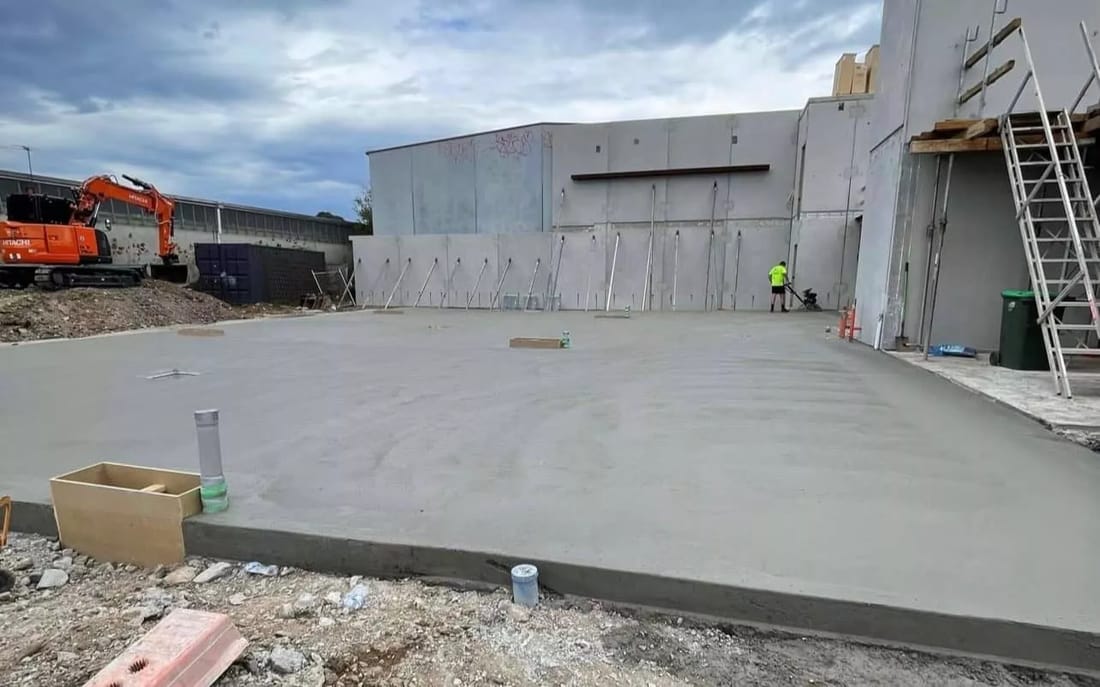
Superior Concrete Little Rock provides focused commercial concrete repair for facilities throughout Little Rock and central Arkansas. We specialize in diagnosing and restoring structural slabs, loading docks, warehouse floors, drive lanes, curbs, and walkways that see heavy commercial traffic.
Instead of offering one generic fix, we evaluate your building use, vehicle loads, and moisture conditions before recommending a repair method. A grocery store dock that sees daily pallet jack traffic needs a different concrete repair approach than an office parking deck or a hospital entrance. Our crews are trained to work in active commercial environments so we plan repairs to keep your doors open as much as possible and to protect your employees and customers.
Because we are local, we account for Little Rock’s temperature swings, clay soils, and frequent rain when we choose materials and schedule work. That reduces the risk of premature cracking, surface spalling, or moisture-related failures that happen when contractors do not understand Arkansas conditions.
On-Site Assessment and Concrete Condition Analysis
Every commercial concrete repair and restoration project starts with a structured assessment. We walk the site with you, look at how the space is actually used, and then map visible defects such as cracks, joint failures, scaling, settlement, and trip hazards.
For heavily loaded slabs, like warehouse aisles or industrial pads, we often use sounding (tapping with a hammer or chain) to locate hollow or delaminated areas where concrete has separated from the base. In older structures or parking decks, we may perform small core sampling or pull off existing patch materials to see whether there is hidden corrosion or bond failure underneath.
Moisture is a major concern in the Little Rock area because of periodic flooding and high humidity. We check for efflorescence, rust staining, or damp spots that indicate groundwater or drainage issues. If we see repeated cracking in patterns, we look at nearby downspouts, slopes, and joints to determine whether movement, poor subgrade, or water is driving the problem.
After the assessment, Superior Concrete Little Rock provides a written summary that divides repairs into safety, structural, and cosmetic categories so facility managers can prioritize work and budget accurately.
Concrete Crack Repair, Joint Rebuilds, and Trip Hazard Removal
For commercial properties, crack and joint problems are more than cosmetic. They damage forklifts, trip pedestrians, and allow water to enter and undermine slabs. We tailor repair methods based on the type and size of distress.
Hairline or nonmoving cracks in interior slabs are typically cleaned and filled with low viscosity epoxy or polyurethane products that penetrate deeply and restore continuity to the slab. Wider cracks that move slightly due to temperature or minor slab movement are routed to a uniform width, thoroughly vacuumed, and sealed with flexible semi rigid fillers that protect the edges without popping out.
Damaged control joints and construction joints, especially in warehouses and big box retail floors, are rebuilt by cutting back to sound concrete, resetting edges, and then installing industrial grade joint fillers designed for hard wheel traffic. This greatly reduces spalling at joints, which is a common maintenance headache for facilities in Little Rock.
For sidewalks, ramps, and entry areas with vertical displacement, we use a combination of grinding and replacement depending on the severity. Grinding is effective for minor offsets and keeps disruption minimal. Where panels have settled or heaved significantly, we remove and replace sections so pedestrians and ADA routes are safe and compliant.
Slab Leveling, Structural Repair, and Load Bearing Solutions
Uneven or settling commercial slabs are common in Arkansas due to clay-rich soils and fluctuating moisture. Superior Concrete Little Rock offers several options for leveling and structural repair based on how critical the area is and what loads it carries.
In many warehouse and retail applications, we use cementitious or polyurethane slab lifting techniques to raise settled concrete back to grade. Small holes are drilled in a precise pattern, then lifting material is injected under controlled pressure to fill voids and bring the slab to design elevation. This method is often appropriate for interior floors where downtime must be minimized and full replacement would disrupt operations.
Where there are structural concerns, such as failed loading docks, retaining walls, or heavily cracked columns and beams, we move beyond surface patching. We may expose reinforcing steel, clean and treat corrosion, and rebuild the section with high strength repair mortars. In some cases additional reinforcing is added or load is redistributed through new footings or piers. We coordinate with engineers when code or design loads require stamped calculations.
For truck courts and commercial drive lanes, we focus on load transfer across joints and slabs. Repairs might include dowel bar installation, joint stabilization, and replacement of broken panels so that heavy vehicles do not continue to break edges and create potholes.
Surface Restoration, Overlays, and Protective Coatings
Not every commercial concrete repair requires full-depth demolition. Often, the base slab is structurally sound, but the surface is worn, slick, or unattractive. In those situations, surface restoration can return function and extend the life of the concrete without a complete rebuild.
We start by preparing the substrate correctly, which is where many repairs fail. This may involve shot blasting, grinding, or scarifying to remove weak concrete, old coatings, and contaminants such as oil or curing compounds. In the humid Little Rock climate, we schedule surface prep and installation to avoid condensation and storms so overlays and coatings bond properly.
For loading areas, kitchens, mechanical rooms, and manufacturing floors, we install industrial overlays and resinous systems that improve chemical resistance and cleanability. In retail and office settings, we can apply polishable overlays or densified polished concrete that resists staining and tire marks while giving a more finished appearance.
Exterior surfaces such as plazas and walkways may receive thin bonded overlays to correct scaling or minor pitting, followed by penetrating sealers that protect against water and deicing chemicals. We select products rated for the temperature ranges seen in central Arkansas so they do not become brittle in cold snaps or soften in summer heat.
What Drives Commercial Concrete Repair Cost in Little Rock
Superior Concrete Little Rock is transparent about the factors that influence commercial concrete repair cost so you can compare options fairly and plan capital budgets.
Key drivers include the depth and extent of damage, access, and required strength or performance. Isolated cracking in an accessible sidewalk is far less expensive to repair than widespread delamination in a high bay warehouse that must meet strict flatness requirements. Working in active facilities after hours or in occupied healthcare or food environments can add labor and containment costs.
Material selection also impacts budget. Standard repair mortars and sealers are appropriate for low traffic or noncritical areas, while high build epoxies, fast setting mixes, and chemical resistant coatings carry a higher material cost but reduce downtime and long term maintenance. We often present multiple options, explaining the tradeoffs between initial price, expected lifespan, and operational disruption.
Little Rock specific conditions can influence cost as well. Sites with poor drainage or history of flooding may require subgrade improvements or added drainage to prevent recurrence, which adds to initial investment but reduces repeated repairs. Steep grades, tight urban sites, or limited staging areas in downtown or medical districts can affect equipment choices and production rates.
Scheduling, Safety, and Why Local Experience Matters
Effective commercial concrete repair and restoration must fit around your operations. We coordinate closely with facility managers, property managers, and tenants to sequence work, set up safe work zones, and maintain access for deliveries, customers, and emergency vehicles.
Our crews are trained to work in live environments, including distribution centers, retail centers, medical office buildings, and industrial plants. We implement traffic control, signage, and barricades appropriate for each site so employees and visitors are kept away from wet concrete, equipment, and trip hazards. Where necessary, we phase work at night or over weekends to minimize business interruption.
Local experience is critical in Little Rock because of soil movement, drainage patterns, and regional construction practices. Superior Concrete Little Rock has worked on properties from small office complexes to multi building industrial parks, so we understand common details used in local construction and how they tend to fail over time. That knowledge allows us to anticipate hidden issues, such as undersized base courses or poorly detailed joints, and correct them during repair instead of waiting for the next failure.
When you contact us for commercial concrete repair, we start with a site visit, provide a clear scope and schedule, and remain available for follow up inspections or future phased work so your concrete assets continue to perform for years.