Home › Commercial Concrete Sealing and Coatings
Superior Concrete Little Rock applies commercial concrete sealing and coatings that protect floors and exterior slabs in Little Rock, AR. We install industrial floor coatings, penetrating sealers, and protective overlays tailored to your facility traffic and exposure. Our solutions help resist chemicals, abrasion, and moisture so your concrete surfaces last longer and stay easier to clean.
Superior Concrete Little Rock provides professional commercial concrete sealing throughout Little Rock, AR, Arkansas and the surrounding area. Our licensed, insured crew delivers safe, clean, on-time work with a free estimate before anything begins. Call (501) 251-1869 or request your free quote.
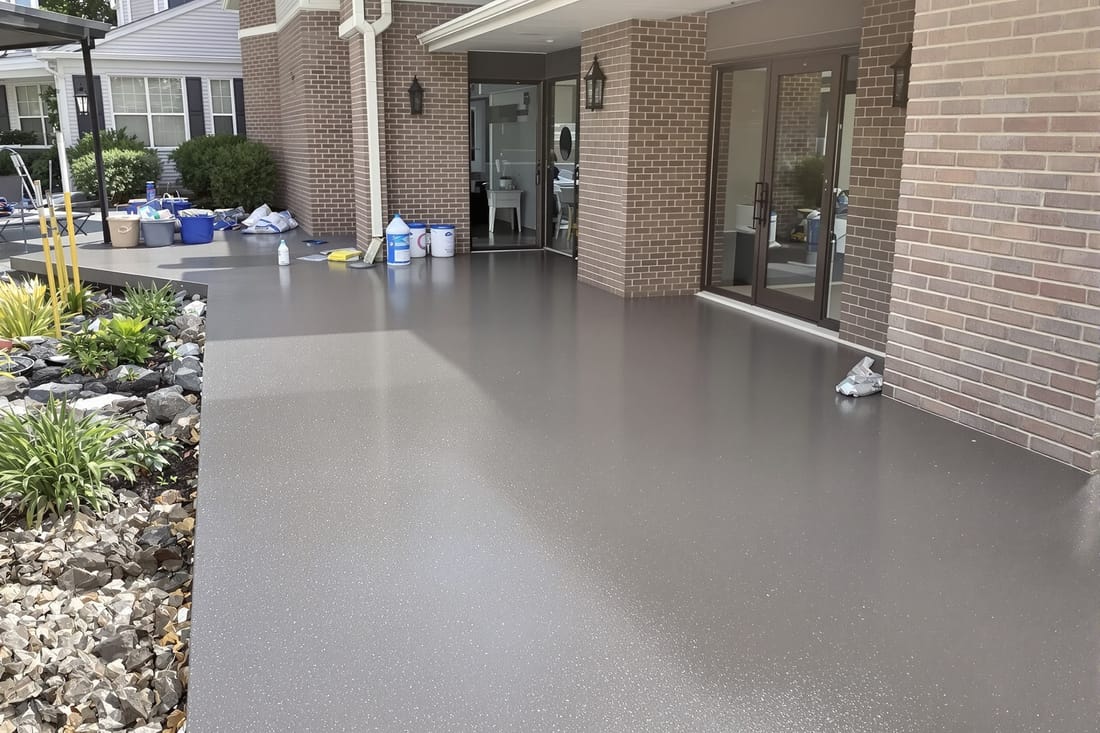
Commercial Concrete Sealing for Little Rock Businesses
Commercial concrete in Little Rock takes a beating from hot summers, temperature swings, and day‑to‑day traffic. At Superior Concrete Little Rock, our commercial concrete sealing and coating work is focused on what local properties actually deal with: UV exposure, de‑icing salts at loading docks, forklift traffic inside warehouses, and heavy foot traffic at storefronts and offices.
We seal and coat concrete for retail centers, restaurants, churches, warehouses, auto shops, medical offices, and multi‑family properties around Little Rock, North Little Rock, Sherwood, Bryant, and surrounding communities. Typical surfaces include sidewalks, patios, dumpster pads, loading docks, showroom floors, warehouse slabs, drive lanes, and stair landings.
A good commercial concrete sealing job does three things: it blocks moisture and chemicals from soaking into the slab, it makes the surface easier to clean, and it improves appearance without creating a slippery hazard. Our team looks at how your concrete is used before recommending a sealer or coating. A restaurant patio near the River Market needs something different than a forklift aisle in an industrial park off I‑30.
If you are trying to protect a newer slab, slow down surface wear on older concrete, or clean up the look of stained or patchy areas, we tailor the system to how your site actually operates. That practical approach is what keeps our work holding up in real Arkansas conditions.
How Our Commercial Concrete Sealing & Coating Process Works
A durable commercial concrete sealing or coating project starts with surface prep. We begin with a detailed inspection to check for moisture problems, previous sealers, oil contamination, and structural issues. We test how water absorbs into the slab and note any areas with peeling paint or coating. This helps us decide whether to use a penetrating sealer, a film‑forming sealer, or a thicker coating system.
Preparation usually includes mechanical cleaning. For sidewalks, pads, and patios, we pressure wash with the right tip and pressure for the condition of the concrete, followed by degreasers in areas with oil, hydraulic fluid, or food grease. For interior slabs and heavily used surfaces, we often use grinding equipment with diamond tooling to open the pores of the concrete and remove old coatings. This step is critical if we are applying epoxy or polyaspartic coatings.
Cracks, spalls, and control joints are dealt with before sealer or coating goes down. Small cracks are routed and filled with repair mortar or flexible joint filler, depending on whether they are in a traffic path or a static area. Larger holes or broken edges around docks and doorways are patched with high‑strength repair products that bond tightly to existing concrete. We want a sound surface so the sealer or coating does not fail at weak spots.
Once repairs have cured as required by the manufacturer, we apply the chosen sealer or coating using sprayers, rollers, or squeegees. Penetrating sealers for exterior concrete are usually applied in one or two wet‑on‑wet passes, so the product soaks in evenly. Film‑forming sealers, epoxies, and polyaspartics are applied at measured mil thickness. We monitor site conditions like concrete temperature and humidity, since Arkansas weather can change quickly, and adjust timing to avoid blistering or hazing.
To finish, we perform a walk‑through with the owner or manager, review cure times, and explain when traffic and cleaning can resume. For busy properties, we often stage the project in phases so operations can continue while sections cure.
Material Options: Sealers and Coatings That Fit Your Use
Different commercial uses in Little Rock call for different concrete sealing approaches. At Superior Concrete Little Rock, we keep the explanations simple so you can make a clear choice without guessing what you are paying for.
Penetrating sealers (silane, siloxane, or blended) are common for sidewalks, exterior stairs, and drive lanes. They soak into the slab and do not leave a surface film, which means no peeling and no glossy finish. These are good for properties that want to keep a natural concrete look while protecting against rain, de‑icing salts, and mild chemical exposure. They help reduce scaling and surface dusting, which we see often after a few Arkansas winters.
Acrylic film‑forming sealers are often used on decorative or stamped concrete patios, entryways, and pool decks at hotels and apartments. These can be clear or tinted and can add a satin or semi‑gloss finish. We add non‑slip additives where needed so you do not trade looks for safety. Because acrylics wear from the top down, they are easier to re‑coat on a maintenance schedule.
For interior commercial floors that see rolling or point loads, such as warehouse aisles, auto shops, and showrooms, we use epoxy or polyaspartic coating systems. Epoxy gives a thick, chemical‑resistant layer that can be plain gray, single color, or broadcast with colored flakes for a more finished look. Polyaspartic topcoats cure faster and have strong UV resistance, which helps in spaces with roll‑up doors or a lot of sunlight.
We also install high‑build systems and specialty coatings where needed, such as slip‑resistant finishes on loading docks or chemical‑resistant coatings in maintenance bays. Our recommendations are based on how many hours a day the area is used, what is spilled on it, and how it is cleaned. For example, a medical clinic that mops every night may need a different topcoat than a warehouse that uses scrubbers weekly.
What Affects Cost and Scheduling for Commercial Concrete Sealing
Commercial concrete sealing and coatings pricing in the Little Rock area mainly depends on three things: surface condition, access, and the type of system you choose. At Superior Concrete Little Rock, we walk you through these cost drivers so there are no surprises.
Surface condition is usually the biggest factor. Slabs with heavy oil staining, multiple layers of old sealer, or glue residues from removed flooring take more time and materials to prepare. That means more grinding, shot blasting, or chemical stripping, which adds labor and disposal time. Cracks, spalls, and joint failures also affect cost, since every repair must be handled before coatings go down if you want a long‑term finish.
Access and phasing matter on busy commercial sites. If we need to work overnight or in short windows so your business can operate during the day, we plan phases and mobilizations around your schedule. That can slightly increase cost but avoids lost revenue. Properties in tight downtown areas or garages with low clearance can also affect which equipment we use and how fast we can move.
The product type and thickness are the other main pricing factor. Penetrating sealers on open exterior concrete are generally lower cost per square foot compared to multi‑coat epoxy or polyaspartic systems. Thicker, more chemical‑resistant systems that need primer, body coat, and topcoat cost more up front but usually last longer in abusive environments like auto shops and industrial spaces.
Scheduling in Arkansas also has to account for temperature and humidity. Most exterior sealing is planned in stable weather with no rain forecast during cure time. In summer, we often start early morning to avoid applying sealer on hot concrete, which can cause flashing and uneven penetration. In cooler months, we pay close attention to manufacturer temperature limits so the products cure properly. During the estimate, we discuss realistic timing so you know when you can safely put foot traffic, vehicles, or forklifts back on the surface.
Common Problems We Solve and What To Ask Before Hiring
Local property managers and owners usually call Superior Concrete Little Rock when they start seeing the same issues: flaking or peeling coatings, salt damage along sidewalks and entry steps, slippery surfaces after rain, stains that will not come up with normal cleaning, or concrete that is turning dusty and chalky in warehouses.
Peeling or flaking is usually a prep or moisture issue. Sometimes a previous contractor applied a film‑forming sealer over a slab that still had curing compound or contaminants on it, or over trapped moisture. We test for moisture and bond before recommending removal and replacement. In many cases, we mechanically remove the failing layer and switch to a breathable penetrating sealer for exterior work or adjust the coating system and prep method for interiors.
Salt and winter damage often show up at curb ramps, loading zones, and front steps, especially where ice melt is used. Here we may combine patch repairs with a penetrating sealer that is specifically rated for freeze‑thaw and de‑icing salts. For slippery surfaces, we use non‑slip additives in the topcoat or adjust the sealer type, especially around restaurant entries, pool decks, and sloped walks.
Before hiring any commercial concrete sealing contractor in Little Rock, there are a few specific questions worth asking. Ask what preparation methods they plan to use on your job and why, whether they will perform moisture testing on interior slabs, what product line and system they are proposing (not just “a sealer”), and how many mills of coating will be applied if it is an epoxy or polyaspartic system. You should also know how long areas will be out of service and what the maintenance plan looks like over the next 3 to 5 years.
When you work with Superior Concrete Little Rock, we put those answers in writing. You get a clear scope that lists prep steps, repair methods, exact products, number of coats, cure times, and any recommended follow‑up maintenance. That way, your commercial concrete sealing or coating project is a planned investment, not guesswork.